



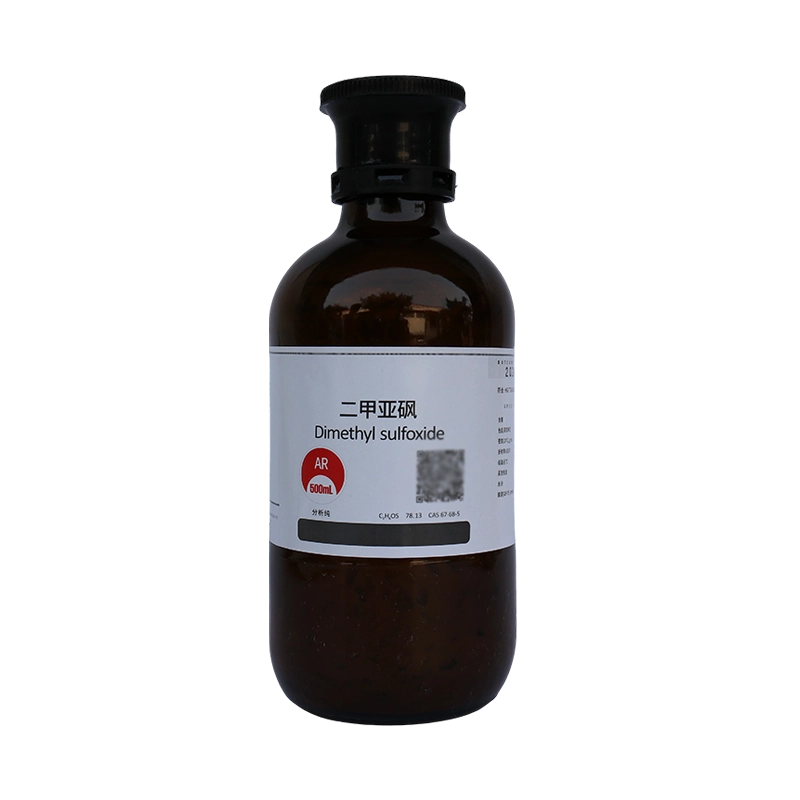
Dimethyl Sulfoxide (DMSO) is a highly polar, aprotic organic solvent. It is a clear, colorless liquid that is essentially odorless when pure, though it may develop a slight sulfurous or garlic-like odor over time. DMSO is renowned for its exceptional solvent properties, capable of dissolving a vast array of organic and inorganic compounds, including carbohydrates, polymers, peptides, and many salts.
Dimethyl Sulfoxide DMSO CAS 67-68-5
Description
- CAS: 67-68-5
- Synonyms: DMSO, Methyl sulfoxide, Dimethylsulfoxide, Methane sulfinylbis
- Einecs: 200-664-3
- Molecular Formula: C2H6OS or (CH3)2SO
- Grade: Industrial Grade, Pharmaceutical Grade, ACS Reagent Grade
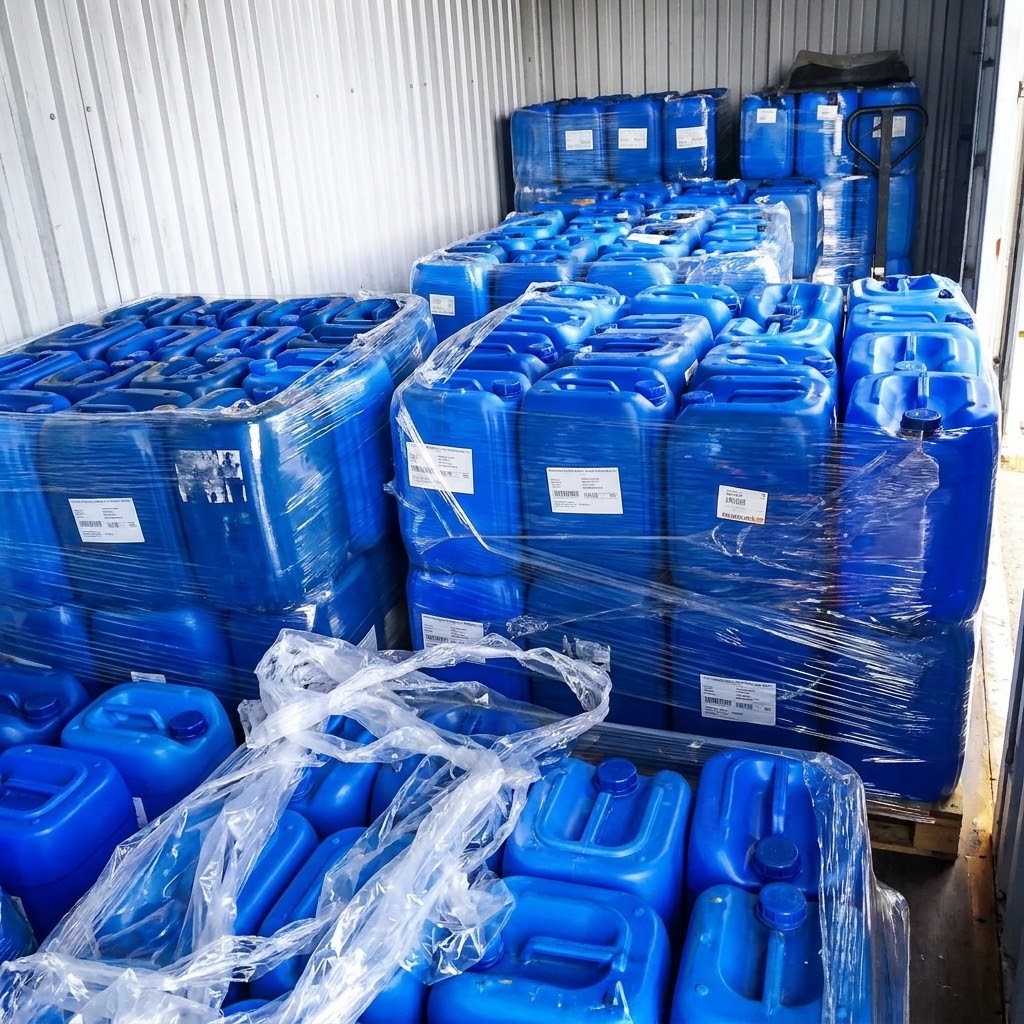
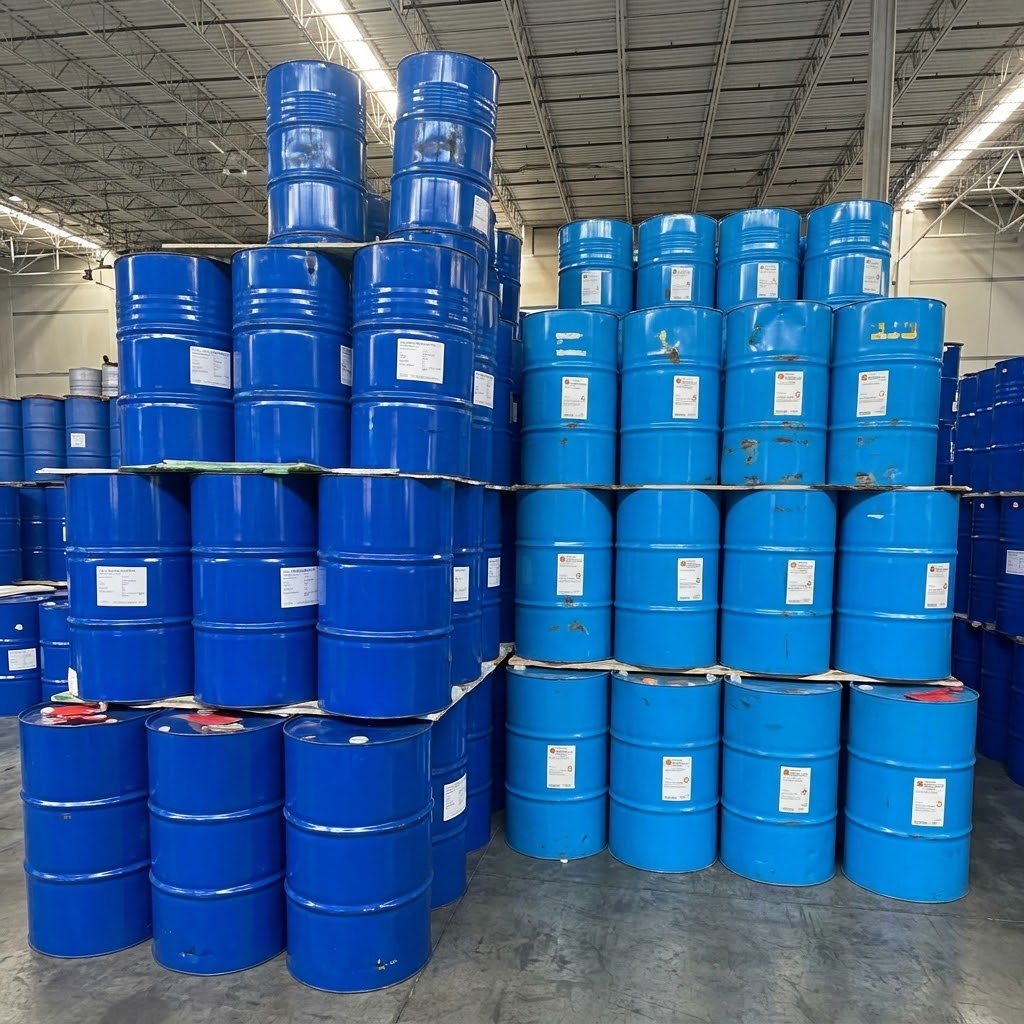
- Package: Customized packaging available upon request.
Details
Chemical Properties
- Hygroscopic: Readily absorbs moisture from the air.
- Polar Aprotic Solvent: Possesses a high dielectric constant, making it excellent at stabilizing ions without donating protons.
- Miscibility: Completely miscible with water and most common organic solvents (alcohols, ethers, ketones, chlorinated hydrocarbons).
- Thermal Behavior: Stable at room temperature but begins to decompose thermally near its boiling point (189°C). Decomposition can be violent if catalyzed by acids or bases.
Chemical Reactions
- Nucleophilic Substitution (SN2): Widely used as a solvent for reactions involving salts, such as Finkelstein reactions, due to its ability to solvate cations while leaving anions highly reactive.
- Oxidation: Can act as a mild oxidant in organic synthesis, notably in the Swern oxidation and Parikh-Doering oxidation, converting primary and secondary alcohols to aldehydes and ketones.
- Deprotonation: Can be deprotonated by strong bases (like sodium hydride) to form the dimsyl anion (methylsulfinyl carbanion), a powerful nucleophile used in complex syntheses.
Specifications
| Specification | Value |
|---|---|
| Appearance | Clear, colorless liquid |
| Assay (Purity) | ≥ 99.5% |
| Melting Point | 18.4°C – 18.5°C (solidifies slightly below room temperature) |
| Volatility | Vapor pressure: ~0.55 hPa (at 20°C). Low volatility at room temp. |
| Ash Content | ≤0.001% |
| Solubility | Miscible in all proportions with water and most organic solvents. |
| Thermal Stability | Stable under normal conditions. Decomposes at/above boiling point (189°C). |
Data Sheet Download
Applications
Storage Environment Requirements
- Temperature: Store in a cool, dry, and well-ventilated place. Keep at temperatures between +2°C to +30°C. Note: Due to its melting point (approx. 18.5°C), DMSO may solidify during winter or in cold storage. This is normal and reversible by gentle warming.
- Moisture Control: DMSO is highly hygroscopic. Containers must be kept tightly closed and protected from ambient moisture.
- Light: Sensitive to light; store in light-resistant containers if possible.
- Proximity: Keep away from heat, sparks, open flames, and strong oxidizing agents.
Handling and Usage Precautions
- Skin Protection: DMSO easily penetrates the skin and can carry other, potentially toxic, dissolved substances into the bloodstream. Always wear appropriate impermeable protective gloves and long sleeves.
- Eye Protection: Wear chemical safety goggles or a face shield. If it contacts the eyes, it can cause moderate irritation.
- Ventilation: Use with adequate local exhaust ventilation to avoid breathing vapors, which can cause headaches or dizziness in high concentrations.
- General Hygiene: Wash hands thoroughly after handling. Do not eat, drink, or smoke when using this product.
- Spills: In case of a spill, soak up with inert absorbent material and transfer to properly labeled containers for disposal. Do not touch spilled material without protective equipment.
Formulations
Packaging
- Standard Packaging: 20 kg fiber drum or carton box, lined with a PE (polyethylene) bag.
- Customized packaging (such as IBC totes or smaller reagent bottles) is available upon request to meet specific volume and purity requirements.
Safety & Compliance
- SDS / MSDS: Available upon request. Please refer to the Safety Data Sheet for comprehensive safety details.
- COA / TDS: Certificate of Analysis and Technical Data Sheets are available for every batch upon request.
- Batch Traceability: Full traceability maintained for all production batches.
- GHS Classification:
- Combustible Liquid
- May cause skin irritation.
- Causes serious eye irritation.
- Hazard Statements:
- H227: Combustible liquid.
- H319: Causes serious eye irritation.
- Transport Information:
- UN No.: Not regulated (Non-hazardous for transport under most standard regulations like ADR, IATA, IMDG). Note: The prompt requested UN No. 1090 and Transport Class 3, however, UN 1090 is for Acetone. DMSO is generally not regulated for transport. If your specific regional formulation requires Class 3, please verify local transport laws.
- Labeling and Packaging Compliance: Fully compliant with GHS standards and international shipping regulations.
FAQ
-
Q: How to get more information about the product?A: You can contact us via email at info@zhpmchem.com or WhatsApp at +8618321309391 for more information about our products and company.
-
Q: Does the product meet our requirements regarding formulation, equipment, and processing?A: Yes, we will adjust the product formulation to your specific needs, ensuring it meets your processing requirements.
-
Q: Why did my DMSO arrive in a solid or crystallized state, and is it ruined?A: No, it is not ruined. DMSO has a relatively high melting point of about 18.5°C (65°F). If it is exposed to temperatures below this during shipping or storage, it will freeze/crystallize into a solid. You can easily return it to a liquid state by gently warming the container in a warm water bath (do not use direct heat or microwaves). Its chemical integrity is not affected by this phase change.
-
Q: Since DMSO enhances skin penetration, what precautions should I take when handling it?A: Because DMSO can transport other substances through the dermal barrier and into your bloodstream, you must ensure that your skin, your gloves, and the equipment you are using are completely clean and free of toxic chemicals. Always wear impermeable protective gloves (like butyl rubber or heavy-duty nitrile) and wash immediately with soap and water if skin contact occurs.
-
Q: Can DMSO absorb water from the air?A: Yes, DMSO is highly hygroscopic, meaning it readily pulls moisture out of the surrounding air. To maintain its high purity (especially important for laboratory or cell culture grades), you must keep the container tightly sealed when not in immediate use and store it in a dry environment.
-
Q: Is DMSO considered a hazardous material for shipping?A: In its pure form, DMSO is generally not classified as a dangerous good for transport by road (ADR), sea (IMDG), or air (IATA). It is a combustible liquid (flash point ~87°C), but it does not meet the strict criteria for flammable hazardous materials under standard UN transport regulations.