


Introduction
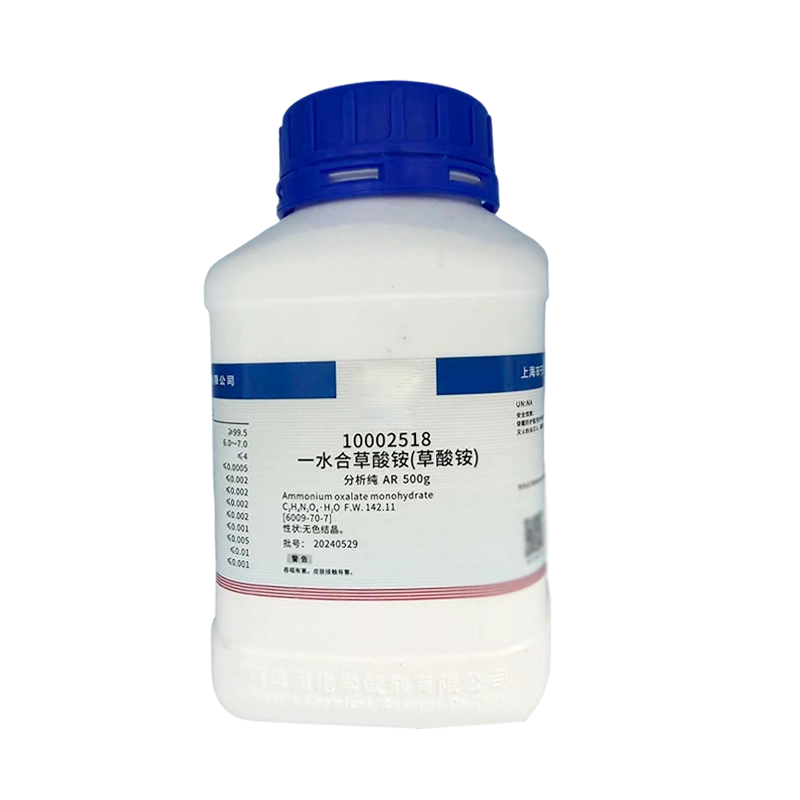
Ammonium oxalate monohydrate is a colorless to white crystalline powder. It is an ammonium salt and possesses a certain degree of toxicity. Upon heating, it first loses its water of crystallization; further heating decomposes it into ammonia gas, carbon monoxide, carbon dioxide, and water, leaving zero ash. In analytical chemistry, it is an extremely important precipitating reagent, specifically forming highly insoluble white calcium oxalate precipitates with calcium ions.
Specification
| Item | Specification |
| Appearance | Colorless transparent crystals or white powder |
| Assay (Purity) | ≥ 99.5% |
| Melting Point | 70 °C (Loses water), decomposes at higher temps |
| Volatility | Non-volatile at room temp, decomposes upon heating |
| Ash Content | Nil (Completely transforms to gases upon strong calcination) |
| Solubility | Soluble in water (approx 5.1 g/100 mL at 20°C) |
| Thermal Stability | Loses crystal water at 70°C; fully decomposes above 200°C |
Applications and Functions
- Analytical Chemistry: The most classic reagent for the detection and precipitation/separation of calcium, strontium, and barium ions; used as raw material to prepare injectable calcium oxalate.
- Metal Surface Treatment: Acts as an oxidant and polishing assistant for aluminum and aluminum alloy anodizing.
- Rust Removal & Cleaning: Combined with other cleaning agents to remove rust spots and scale from metal surfaces.
Storage Requirements
Store in a cool, dry, well-ventilated warehouse, away from fire and heat sources. Because it has reducing properties and produces toxic decomposition products, it must be stored strictly separately from strong oxidants, strong acids, and edible chemicals.
Handling and Precautions
Ammonium oxalate is toxic. Inhalation, ingestion, or skin absorption are all harmful, and it may cause severe damage to the kidneys (by forming insoluble calcium oxalate stones that block renal tubules). Operators must wear full chemical protective gear, including dust masks and gloves. Eating or drinking in the operating area is strictly prohibited.
Formula & Function
Quantitative Titration of Calcium Ions in Water: Water Sample + Ammonia (to make weakly alkaline) + Saturated Ammonium Oxalate Solution.
Function: Ammonium oxalate provides abundant oxalate ions in a weakly alkaline environment, quantitatively binding with calcium ions in the water sample to form a calcium oxalate precipitate. After filtering out the precipitate, the oxalate is titrated with potassium permanganate to extremely precisely calculate the concentration of calcium ions (water hardness).
Packaging
fiber drum or carton box, lined with PE bag. Customized packaging available upon request.