


Introduction
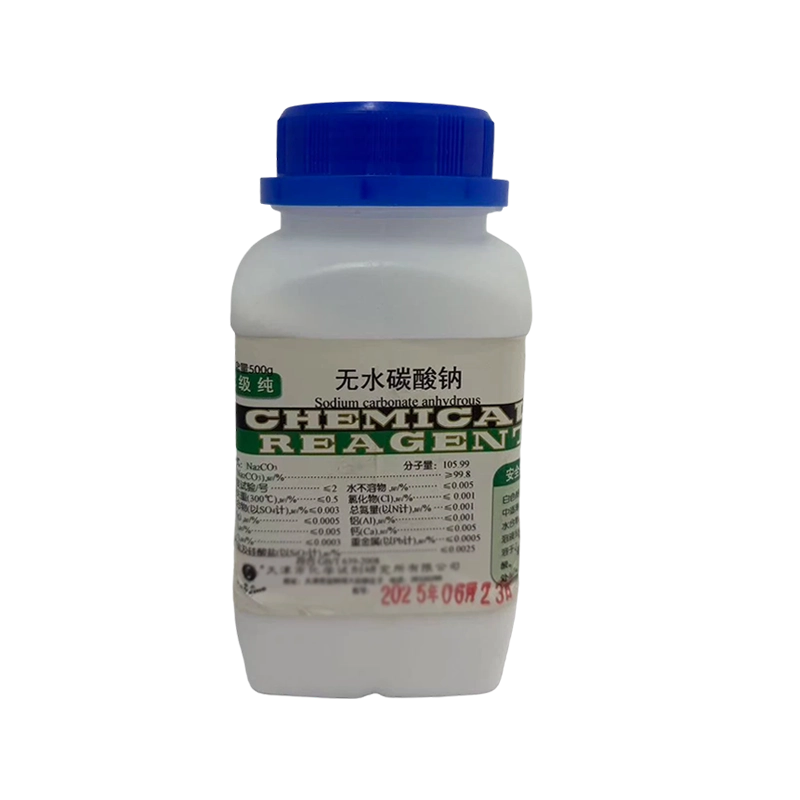
Anhydrous sodium carbonate, commonly known as soda ash or washing soda, is a white powder or fine granular solid. Although its common name contains “soda/ash” implying alkalinity, it is actually a salt. Its aqueous solution is strongly alkaline. It is hygroscopic; in humid air, it absorbs moisture and carbon dioxide, causing it to clump. It reacts readily with acids, releasing large amounts of carbon dioxide; it forms insoluble carbonate precipitates with calcium and barium ions.
Specification
| Item | Specification |
| Appearance | White powder (Light) or uniform granules (Dense) |
| Assay (Purity) | ≥ 99.2% |
| Melting Point | 851 °C |
| Volatility | Non-volatile |
| Ash Content | ~ 100% |
| Solubility | 21.5 g/100 mL (20°C in water), insoluble in ethanol |
| Thermal Stability | Highly stable, does not decompose at melting point |
Applications and Functions
- Glass Manufacturing: Acts as a flux that significantly lowers the melting temperature of silica sand; it is the core raw material for flat glass and glass container production.
- Detergents & Chemicals: Used to produce soap and synthetic detergents, serving to soften water and provide an alkaline environment for cleaning.
- Metallurgy & Dyeing: Used for desulfurization in steelmaking; acts as a fixing agent and water softener in the dyeing process.
Storage Requirements
Should be stored in a dry, ventilated, and cool warehouse. It is highly prone to absorbing moisture and clumping, and can even absorb carbon dioxide from the air to transform into sodium bicarbonate. Ensure packaging is intact; do not store with acids or high-moisture items.
Handling and Precautions
The dust is moderately irritating to the eyes, respiratory tract, and skin. Operators should wear dust masks, safety goggles, and work clothes. Accidental ingestion or massive inhalation will cause mucosal burns. It produces large amounts of gas when reacting with acid; add it slowly when preparing solutions.
Formula & Function
Standard Glass Production Formula (approx. by weight): Pure Silica Sand (60%) + Soda Ash (20%) + Limestone (20%).
Function: Silica sand has an extremely high melting point (approx. 1700°C). Soda ash acts as a flux in this formula. It reacts with silica sand at high temperatures to form sodium silicate, drastically lowering the overall melting temperature to around 1400°C-1500°C. This saves immense amounts of energy and makes the glass easy to shape.
Packaging
fiber drum or carton box, lined with PE bag. Customized packaging available upon request.