



Introduction
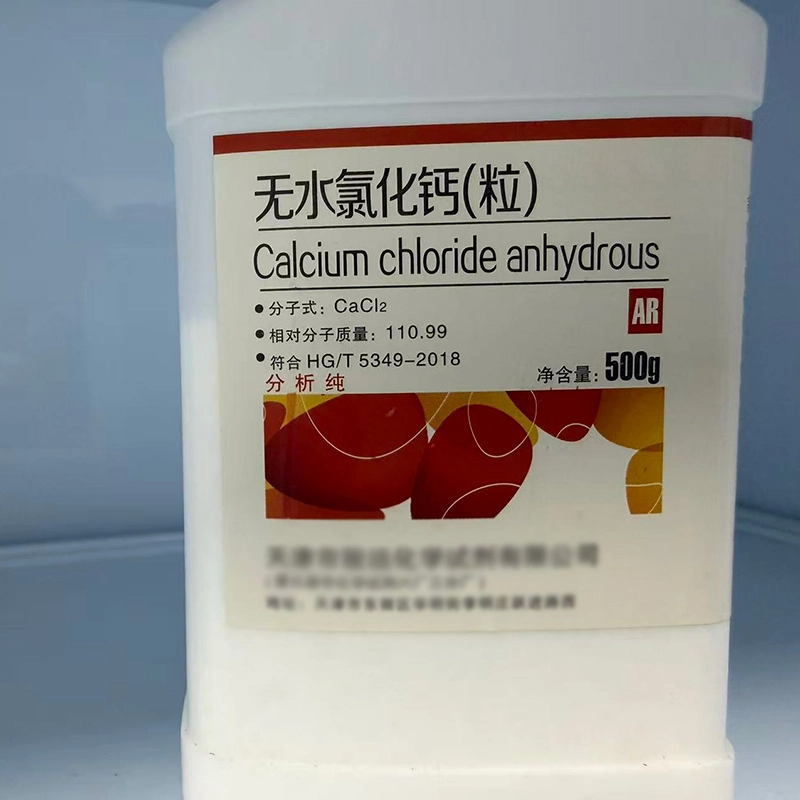
Anhydrous calcium chloride appears as white, porous granules and exhibits extreme deliquescence (it readily absorbs moisture from the air and turns into a liquid). It releases a massive amount of heat when dissolved in water. Its aqueous solution is slightly acidic to neutral. As a strong electrolyte, it undergoes precipitation reactions with carbonates and sulfates to form insoluble calcium salts.
Specification
| Item | Specification |
| Appearance | White granular solid |
| Assay (Purity) | ≥ 94.0% |
| Melting Point | 772 °C |
| Volatility | Non-volatile |
| Ash Content | High |
| Solubility | Extremely soluble in water (74.5 g/100 mL at 20°C, exothermic) |
| Thermal Stability | Thermally very stable, does not decompose upon melting |
Applications and Functions
- Desiccant & Dehydrating Agent: Filled in drying tubes or packets to dry gases (such as nitrogen, oxygen, hydrogen chloride) and various organic solvents.
- Snow Melting Agent: Spread on roads to quickly melt ice and snow; it releases heat upon dissolution and drastically lowers the freezing point of water.
- Petroleum Drilling: Used to formulate solid-free kill fluids and completion fluids, adjusting the density and activity of drilling muds.
Storage Requirements
Due to its extremely strong hygroscopicity, it must be stored in extremely dry, well-ventilated indoor environments. Open-air storage is strictly prohibited. Packaging bags must be lined with thick, moisture-proof plastic bags and tied tightly. Once opened, it must be used quickly or completely resealed.
Handling and Precautions
Anhydrous calcium chloride dust is irritating to the eyes, nose, and throat. If it touches the skin, and the skin is sweaty, the high heat released by hydration can cause localized burns and dermatitis. Gloves and safety goggles should be worn during operation.
Formula & Function
Winter Road Snow Melter: Calcium Chloride Granules (70%) + Sodium Chloride (25%) + Corrosion Inhibitor (5%).
Function: Compared to using table salt alone (sodium chloride, which fails at around -9°C), calcium chloride dissolves quickly with an exothermic reaction. Its aqueous solution has an extremely low freezing point (down to about -50°C), allowing it to handle road icing in extreme cold weather and rapidly melt the ice layer.
Packaging
fiber drum or carton box, lined with PE bag. Customized packaging available upon request.