



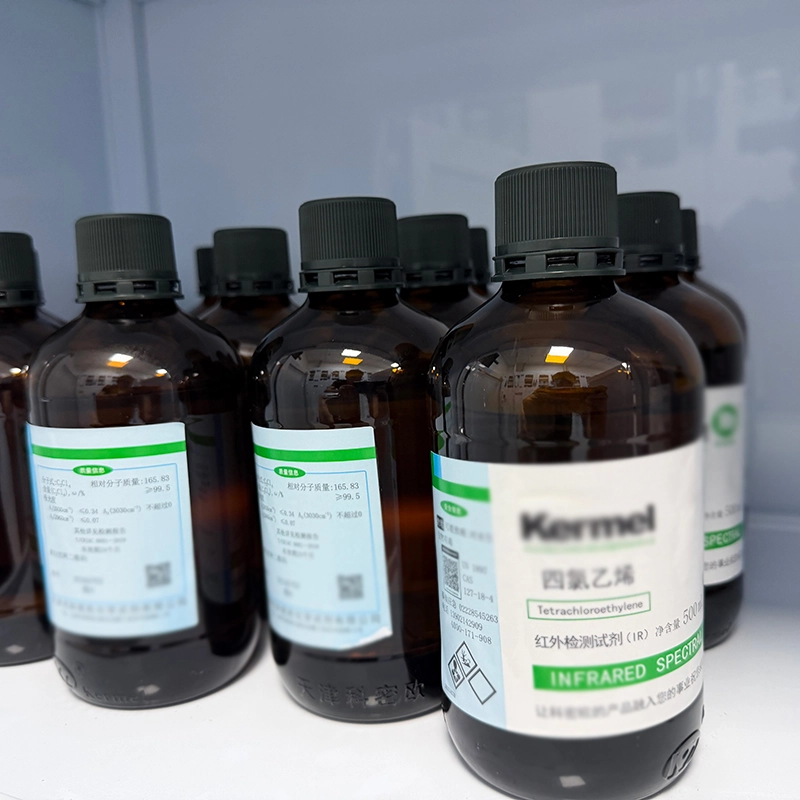
Introduction
Tetrachloroethylene (PCE) is a colorless, transparent liquid with an ether-like odor. It is a non-flammable halogenated hydrocarbon solvent. Chemically, it is relatively stable. Because its molecule is non-polar and has a high chlorine content, it has extremely strong dissolving power for grease, tar, and many organic substances. Under moisture, UV light, or high temperatures, it may slowly decompose to form toxic phosgene or hydrogen chloride.
Specification
| Item | Specification |
| Appearance | Colorless transparent liquid |
| Assay (Purity) | ≥ 99.9% |
| Melting Point | -22 °C |
| Volatility | High (Vapor pressure 1.86 kPa at 20°C) |
| Ash Content | ≤ 0.005% |
| Solubility | Insoluble in water, miscible with most organic solvents |
| Thermal Stability | Stable up to 500°C without moisture; decomposes with UV light/moisture |
Applications and Functions
- Dry Cleaning Industry: The most mainstream dry-cleaning solvent. It is safe (non-flammable) and efficiently dissolves and removes grease and dirt from clothes without damaging fibers.
- Metal Processing: Used as a metal parts degreaser and cleaner, removing anti-rust oils and lubricants from metal surfaces prior to electroplating or painting.
- Chemical Raw Material: Used as a basic raw material for synthesizing fluorinated refrigerants (such as HFC-134a).
Storage Requirements
Store in a cool, dry, well-ventilated, and dark warehouse. The warehouse temperature should not exceed 30°C. Containers must be kept sealed. It must be stored in isolation from alkali metals and strong oxidants.
Handling and Precautions
Listed as a suspected human carcinogen; damages the central nervous system and liver. It absolutely must not be used in large quantities in confined spaces. Operations must be conducted in a fume hood or a closed dry-cleaning machine. Wear gas masks and solvent-resistant gloves. Liquid spills must be absorbed with sand and disposed of as hazardous waste.
Formula & Function
Industrial Metal Degreasing Cleaner: Pure Tetrachloroethylene (99.5%) + Stabilizer (0.5%).
Function: Utilizing its extremely low surface tension and powerful dissolving capability, PCE quickly penetrates tiny crevices in metal parts to completely dissolve and wash away heavy grease. Stabilizers are added to prevent it from decomposing into acidic substances that would corrode metal under high heat and metal catalysis.
Packaging
fiber drum or carton box, lined with PE bag, iron drums. Customized packaging available upon request.