



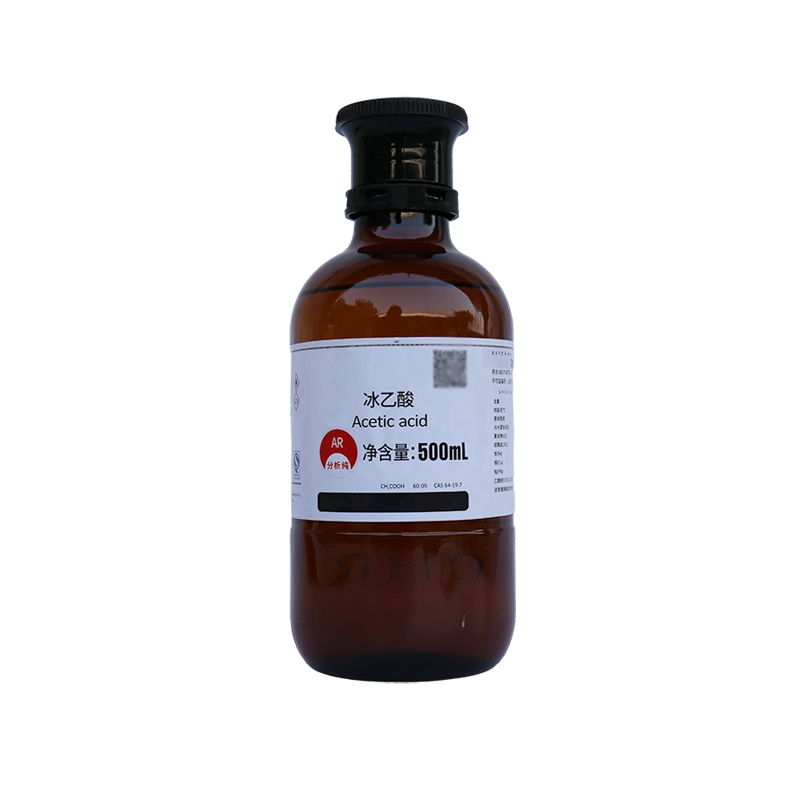
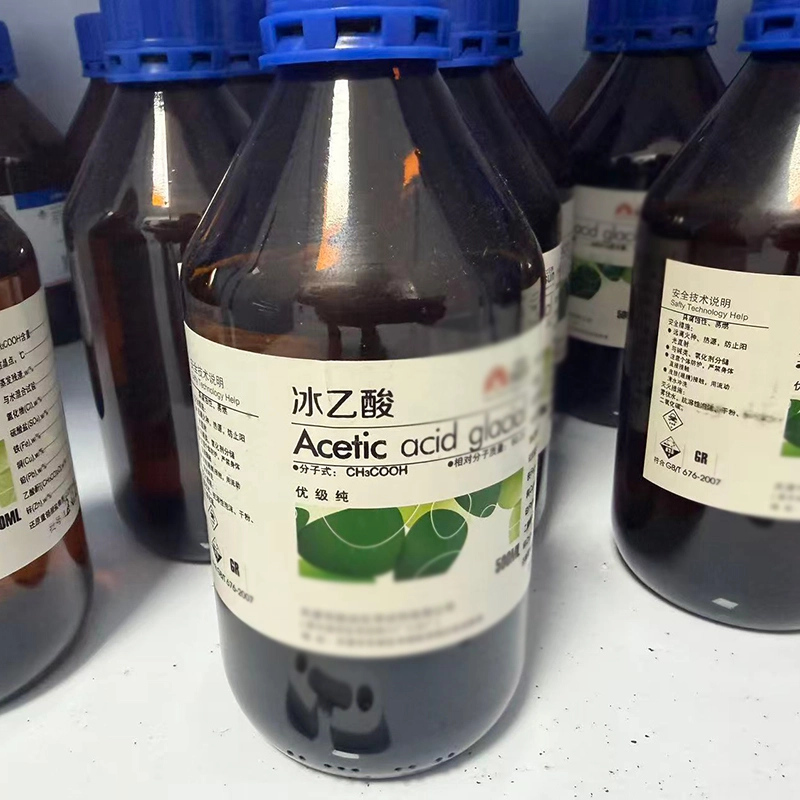
Glacial Acetic Acid (GAA) is a clear, colorless liquid with a strong, pungent, vinegar-like odor. Due to its high purity (typically ≥ 99.5%), it freezes to an ice-like solid below 16.6 °C (61.9 °F), hence the name "glacial acetic acid." It stands as one of the most essential organic acids in the global chemical industry.
Glacial Acetic Acid GAA CAS 64-19-7
Description
- CAS: 64-19-7
- Synonyms: Ethanoic acid, Acetic acid, Methanecarboxylic acid
- Einecs: 200-580-7
- Molecular Formula: C2H4O2 / CH3COOH
- Grade: Industrial Grade / Food Grade / Pharmaceutical Grade
- Package: As required
Details
Characteristics
Highly hygroscopic and a typical weak acid. It is completely miscible with water, ethanol, and ether, offering excellent solvent properties. Despite being classified as a weak acid, high-concentration glacial acetic acid is intensely corrosive.
Reactions
Esterification: Readily reacts with alcohols to form acetate esters (such as ethyl acetate), representing one of its most widespread industrial applications.
Neutralization: Reacts with bases or inorganic salts to produce various metal acetates.
Displacement Reaction: Reacts with active metals (like zinc and magnesium) to release hydrogen gas.
Specifications
| Appearance | Clear, colorless liquid |
| Assay (Purity) | ≥ 99.8% |
| Melting Point | 16.6 °C (61.9 °F) |
| Volatility | Highly volatile |
| Ash Content | < 0.01% |
| Solubility | Miscible with water, ethanol, and ether |
| Thermal Stability | Stable under standard conditions |
Applications
Glacial Acetic Acid plays an indispensable role across multiple industrial sectors:
- Chemical Synthesis & Polymers: Utilized as a core intermediate to manufacture vinyl acetate monomer (VAM), acetic anhydride, and various acetate esters. Function: Provides the vital acetyl group, serving as the fundamental backbone for synthesizing plastics, adhesives, and synthetic fibers.
- Textile & Dyeing Industry: Deployed as a pH regulator and buffer during fabric processing and dyeing operations. Function: Precisely controls dye-bath pH levels, assists in dye fixation, and neutralizes residual alkali on processed fabrics.
- Coatings & Paints: Employed in the synthesis of specialized industrial solvents and resin modifiers. Function: Enhances the flow and solubility performance of coatings while reducing volatilization and drying durations.
- Water Treatment & Industrial Cleaning: Applied for specialized industrial scale removal. Function: Effectively dissolves and strips mineral deposits (such as calcium carbonate scale) from industrial metal surfaces while remaining significantly milder than strong mineral acids.
Storage Requirements
- Temperature Control: Storage temperature must be maintained above 16.6 °C (61.9 °F) to prevent freezing and crystallization. If crystallization occurs, thaw slowly in a warm-water bath; direct open-flame heating is strictly prohibited.
- Environmental Conditions: Store in a cool, dry, and well-ventilated dedicated chemical warehouse, completely isolated from heat sources, ignition sparks, and direct sunlight.
- Segregation: Must be stored separately from strong oxidizing agents, strong bases, strong acids, and combustible materials.
Handling & Precautions
- Personal Protective Equipment (PPE): Operators must wear acid-alkali resistant gloves, chemical safety goggles, full-face shields, and anti-corrosive work apparel. Use an approved respirator in poorly ventilated environments.
- Operational Safety: Avoid direct contact with skin and eyes; strictly prohibit vapor inhalation. Operations should be conducted in areas equipped with robust local exhaust ventilation systems.
- Emergency Response: In the event of accidental skin or eye contact, immediately flush the affected area with copious amounts of running water for at least 15 minutes and seek professional medical assistance immediately.
Formulations
- Industrial Descaling Agent Formulation:
- Ratio: 5% – 10% Glacial Acetic Acid + Water + minor corrosion inhibitor.
- Role: Leverages weak acidity to safely dissolve carbonate scales in pipelines and boilers while presenting drastically lower base-metal corrosiveness compared to hydrochloric acid.
- Polyvinyl Acetate (PVA) Adhesive Synthesis Formulation:
- Ratio: Glacial Acetic Acid participates as a synthetic precursor (yielding VAM) within the polymerization cycle.
- Role: Acts as a primary raw material for monomer synthesis, ultimately imparting superior adhesion strength and film-forming performance to the adhesive.
- Fabric Neutralizing Agent:
- Ratio: Utilizes an ultra-low concentration (approx. 1–2 g/L) aqueous solution.
- Role: Effectively neutralizes residual alkalinity following alkaline reduction treatments, restoring a soft and natural hand feel to textiles.
Packaging
Fiber drum or carton box, lined with PE bag. Customized packaging available upon request.
FAQ
-
Q: How to get more information about the product?A: You can contact us via email at info@zhpmchem.com or WhatsApp at +8618321309391 for more information about our products and company.
-
Q: Does the product meet our requirements regarding formulation, equipment, and processing?A: Yes, we will adjust the product formulation to your specific needs, ensuring it meets your processing requirements.