


Introduction
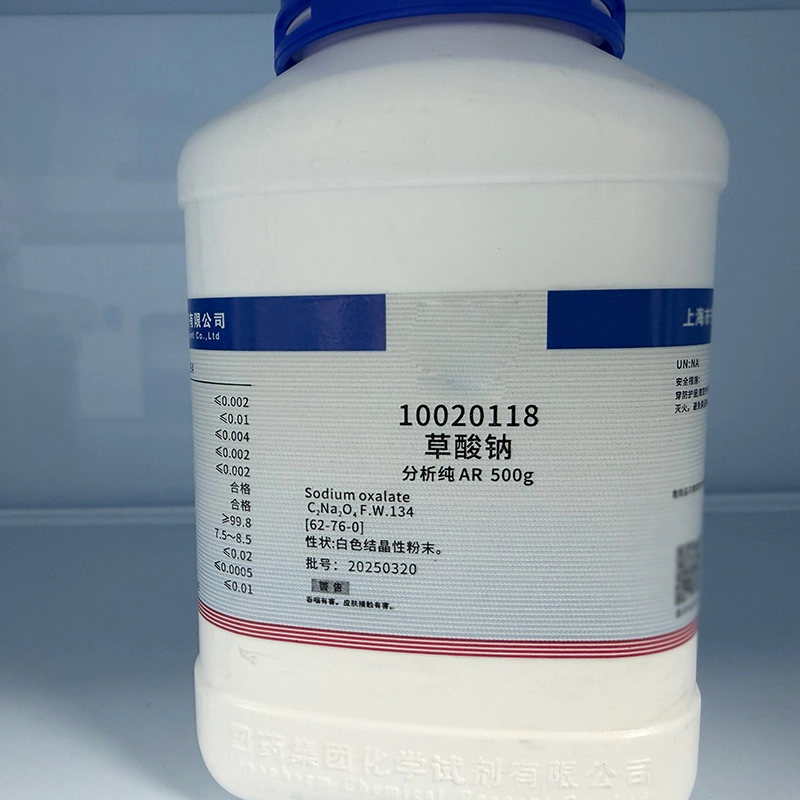
Sodium oxalate is the sodium salt of oxalic acid, appearing as a white crystalline powder. It is a reducing agent and is toxic. It serves as a crucial primary standard substance in analytical chemistry.
Common chemical reactions: oxidized by potassium permanganate (KMnO4) into carbon dioxide and water under acidic conditions (a reaction used to standardize KMnO4 solutions); reacts with calcium ions to form highly insoluble calcium oxalate precipitates.
Specification
| Item | Specification |
| Appearance | White crystalline powder |
| Assay (Purity) | ≥ 99.0% |
| Melting Point | 250 – 270 °C (Decomposes) |
| Volatility | Non-volatile |
| Ash Content | N/A (Transforms to Na2CO3 upon heating) |
| Solubility | 3.7 g/100 mL (20°C in water), insoluble in alcohol |
| Thermal Stability | Decomposes above 250°C into sodium carbonate and carbon monoxide |
Applications and Functions
- Analytical Chemistry: Primary standard reagent for standardizing potassium permanganate solutions.
- Metallurgy & Tanning: Used in leather tanning processes and as a precipitant to separate noble metals.
- Pyrotechnics: Used to manufacture yellow-flame fireworks.
Storage
Store in a cool, dry, and well-ventilated warehouse. Packaging must be tightly sealed and moisture-proof. It should be stored separately from oxidants, acids, and food-grade chemicals. Mixed storage is strictly prohibited.
Handling and Precautions
This product is toxic. Ingestion or inhalation of dust is harmful (can cause hypocalcemia and kidney damage). Operators must wear dust masks, safety goggles, and rubber gloves. Avoid direct contact with skin and eyes; wash thoroughly after handling.
Formula
Metal Rust Remover / Cleaner: Sodium Oxalate (5%) + Surfactant (2%) + Water (93%).
Function: The oxalate ions in sodium oxalate can undergo a complexation reaction with iron rust (iron oxide) on metal surfaces, forming soluble iron oxalate complexes, thereby effectively removing rust and brightening the metal surface.
Packaging
fiber drum or carton box, lined with PE bag. Customized packaging available upon request.
FAQ
Is sodium oxalate harmful to the environment?
Large-scale discharge will harm water bodies because it depletes calcium ions and alters pH levels. Waste liquids must be treated with calcium salts to precipitate it before discharge.
Why is heating sodium oxalate dangerous?
When decomposing at high temperatures (above 250°C), sodium oxalate releases highly toxic and flammable carbon monoxide (CO) gas. Therefore, heating operations must be conducted in a fume hood.
What is the difference between sodium oxalate and oxalic acid?
Oxalic acid is an acid and is strongly acidic; sodium oxalate is its salt, and its aqueous solution is weakly alkaline. Although both contain oxalate ions, they differ significantly in corrosiveness and physical form.